
Fighting Our Inner Calvin
Today’s media is one of the strongest influences we endure throughout our day-to-day lives. Whether we notice it or not new ideas and brands are constantly being suggested for the sake of cooperate gain. The consideration for how this affects the public goes unnoticed at times and can be severe when it comes to how it influences the youth in how they learn about people and the world around them.
When consuming media, we usually just take it at face value, nothing more, nothing less. However, this can lead to a vicious cycle of ignorance for youths if they take various tropes as fact. In cases such as the beloved Calvin and Hobbes, Calvin constantly overestimates himself using language and thinking of concepts that are usually far above a 6-year-old.
In doing so this exhibits a behavior to youths that being ignorant of their ignorance is just how things are. This is communicated in various sources of media, for the sake of the argument, Calvin and Hobbes will be the focal point. It’s easy for people to get comfortable and establish a relationship with fictitious characters. Communicated in a story done by NPR, the story goes into how media and shows, such as The Fresh Prince of Bel-Air, communicate values to a viewer which can go by subconsciously yet alter how we perceive the world.
Shows, such as The Fresh Prince, allow people to be exposed to themes and elements that they otherwise wouldn’t normal indulge in. In someways it can help one become more comfortable with a different demographic or situation (Singh, 2015). Yet themes can still be communicated and misconstrued especially by young demographics.
Kids don’t always know right from wrong right away. In their small world they are the focal point and whatever they think is usually right. This ignorance simply comes from a lack of knowledge about the world. Yet how can the children be to blame when they don’t know any better?
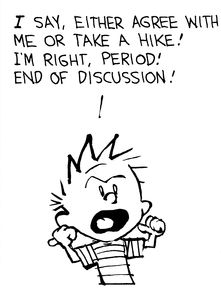
While harmless, Calvin does inherently communicate the behavior that the young have the power and are right in every way. In doing so this can contribute to reclusive and arrogant behavior that can and will effect how they interact with the world.
Yet this isn’t the only thing that Calvin communicates. Calvin is headstrong, and independent aside from the times where he relies on Hobbes. Calvin encourages individualism, he lives in his own world but that is exactly how he likes it. Despite criticisms from the school bully and even his own parents he still holds onto what he loves and finds joy doing. While various forms of media can communicate all sorts of things, there are pros and cons to everything. What is truly important is that we as people encourage individualism and uniqueness.
Calvin has a clear influence when it comes to how he interacts and engages with media. One of his biggest pastimes is reading comic books, usually about action with a hero or a brave explorer on a foreign alien planet. It’s clear that this source influences Calvin greatly as it goes unnoticed by him. At school he is constantly day dreaming about the adventures he reads about, resulting in poor performance in school, and being distant to other classmates.
Calvin’s connection with Hobbes demonstrates the need for connection yet because of the influence of media in tandem of his overactive imagination Calvin finds himself alone a large majority of the time. However, this is okay by Calvin’s standards, he is content and believes that he doesn’t need anything else because of how his media consumption habits have impacted how Calvin engages with the world.
Our media consumption habits have a clear and dominating influence on our lives which for the most part goes largely unnoticed. This can have negative effects on one’s social cognitive development as well as positive effects as media can expose us to elements that would otherwise be foreign to us. Media is amazing in the fact that it can provide experiences that otherwise wouldn’t be as accessible, yet one should always take a moment to sit back and ask themselves ‘What is my media consumption doing to me?’ because whether we want to believe it or not, we are all influenced by the media we consume.
References:
Maanvi Singh, NPR, How shows like ‘Will & Grace’ and ‘Black-ish’ Can Change Your Brain, (2015).
Bill Watterson, Calvin and Hobbes, (1985-1995).
Bubscribe below to stay up-to-date with new entries
 Multiculturalism and the Media